

VW Transporter EGR delete
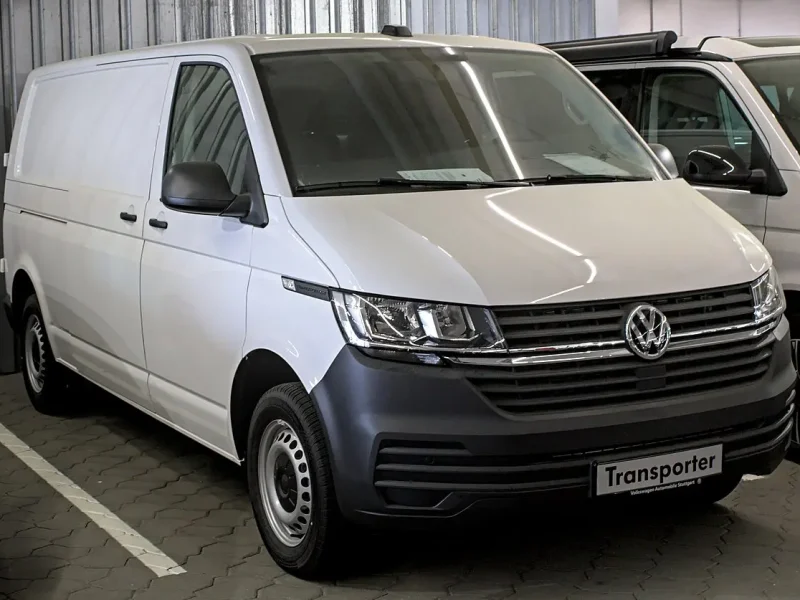
The Transporter is one of the most common vehicles we work on. It is also one of the most predictable. EGR valve failures on the T5 and T6 2.0 TDI follow a consistent pattern, they develop at a consistent mileage range, and the fix is the same every time: remap the ECU, disable EGR operation, clear the codes.
If your Transporter has an engine management light and a rough idle, especially first thing in the morning, read on.
EGR delete is for off-road and track use only. This service is not for vehicles used on public roads.
Why Transporters suffer more than most
The EGR system on any diesel is most vulnerable to carbon build-up when the engine runs at low temperatures for short periods. This is exactly how most Transporters are used.
A tradesperson's van does ten runs a day. Site to depot. Depot to site. Across town to pick up materials. Short, stop-start, low-load. The engine barely gets up to full operating temperature before it is switched off again. EGR cleaning cycles require sustained higher-load running, the kind of driving a Transporter doing trade work rarely sees.
The result is carbon accumulating in the EGR valve and the passages around it. The valve starts to stick. The ECU sees a position discrepancy and logs a fault. The engine management light comes on and, in many cases, the van enters limp mode. That is when most owners call us.
The T5 and T6 are the most-booked vehicles through our diary. We know these engines well.
Engine codes covered
T5 (2009-2015) The 2.0 TDI in the T5 came in two main variants relevant to EGR work:
- CAAA, 84 PS single turbo
- CFCA, 180 PS BiTurbo
Both use the same basic EGR architecture and both fail in the same way. The CFCA BiTurbo is particularly common, and EGR faults on this engine are extremely well-documented across the VW commercial community.
T6 (2015-present) The T6 updated the engine codes but kept the 2.0 TDI format:
- CXHA, 150 PS
- CXFA, 102 PS
The T6 EGR is slightly revised compared to the T5 but presents the same failure profile. If anything, the tighter tolerances on the T6 mean that a sticky EGR valve shows up in the ECU data faster.
Caravelle is covered on the same basis as the Transporter. The Caravelle uses identical engine and ECU hardware, the delete process is the same and the price is the same.
The service
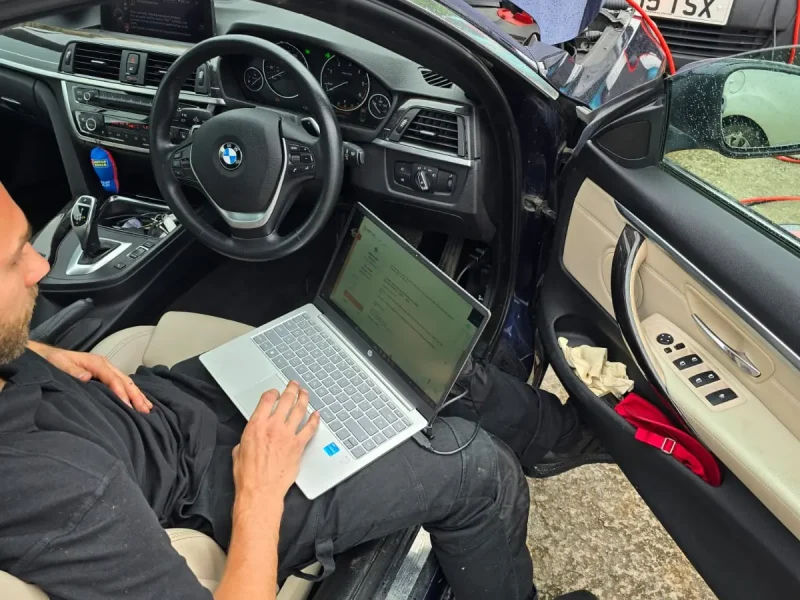
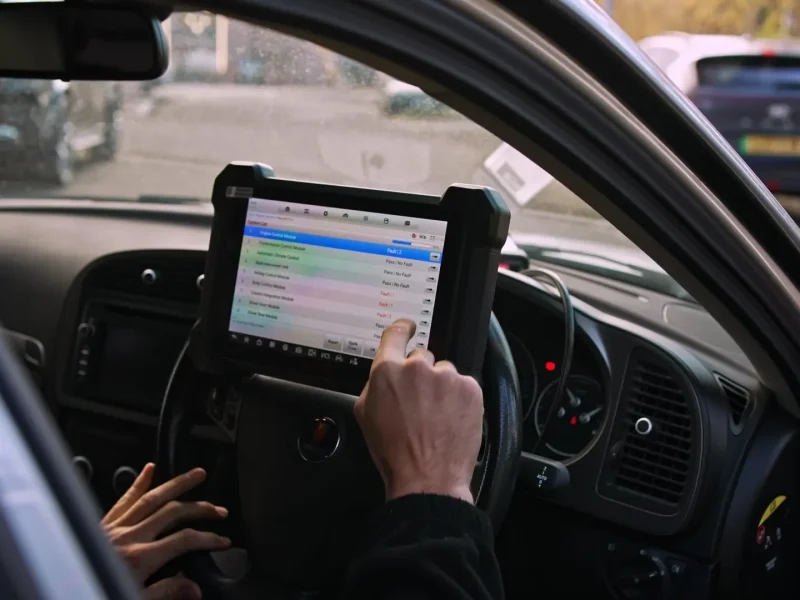
We come to your location. Home, site, depot, wherever the van is. We connect to the OBD port, pull the current ECU calibration, apply the EGR delete map, and write it back. No physical parts are touched. The EGR valve stays in place; the ECU simply stops signalling it and stops monitoring it.
Typical session time is 60 to 90 minutes. We test the van before we leave and confirm that all EGR fault codes are cleared and not returning.
Price: £220 flat. No call-out fee. No additional charges.
The most common fault codes we clear on Transporters are P0401, P0403, and P0404. If your van also has codes unrelated to the EGR, we will flag those separately so you know what else may need attention.

What happens if you keep driving with EGR faults
Leaving EGR faults active and continuing to use the van is not always immediately damaging, but it is not without risk. A stuck-open EGR valve can allow carbon debris to enter the intake manifold. In some cases this causes turbo wear over time. More immediately, limp mode means the van is running at reduced power, on a working van, that is lost productivity.
Some owners try clearing codes and running on. The codes come back. Others fit EGR blanking plates without an ECU remap, which usually generates more fault codes because the ECU is still looking for EGR activity. A software delete resolves all of this at the ECU level.
Book
Call 0161 694 7331. Give us your registration and location and we will get a visit booked in. We cover a 40-mile radius of Eccles and carry a flat rate of £220 for the T5, T6, and Caravelle.
Frequently asked questions
My Transporter keeps coming out of limp mode when I restart it. Is that normal?
Will this void my van's warranty?
I have a T5.1, is that covered?
Can you do multiple vans at the same site?
Does the delete affect DPF operation?
What if the van has other fault codes alongside the EGR ones?
Other VW models we cover
Pick your model: