
Land Rover EGR delete
EGR delete is for off-road and track use only and is not suitable for vehicles used on public roads. For Land Rover owners, particularly those running Defenders on farms, estates or rough terrain, the off-road-only nature of this service is not a legal fiction. It is an accurate description of how many of these vehicles are actually used. We carry out the ECU remap, remove the EGR from the software permanently, and leave you with a vehicle that will not throw an EGR fault on a muddy track fifty miles from the nearest workshop.
Land Rovers are built for off-road use. So is this service.
EGR faults across the Land Rover range
Land Rover uses diesel engines from multiple suppliers across its range, and EGR faults appear across all of them. The fault patterns vary slightly by engine but the result is always the same: an engine management light, a drop into limp mode, and a vehicle that is not doing what it was built to do.
Here is what we see most often by model.

Discovery Sport (L550), Ingenium 2.0D
The Discovery Sport with the Jaguar Land Rover Ingenium 2.0D four-cylinder is the model we see most often for EGR work. The Ingenium engine is a modern unit with some good engineering credentials, but the EGR system is a persistent weakness. Fault code P0400 and related EGR flow codes are common from around 50,000 miles. The ECU delete removes the EGR circuit from the Ingenium's software and clears the fault permanently.
Defender (L316), 2.2 TDCi and 2.4 TDCi
The pre-2020 Defender ran Ford-sourced TDCi engines, and EGR valve and cooler failure is well documented on both the 2.2 and 2.4 TDCi units. These vehicles are frequently used in agricultural and rural applications where off-road use is a daily reality. The EGR delete is carried out via ECU remap in the same way as any other diesel, and it is among the more natural applications of this service given how these vehicles are actually used.

Defender (L663), 3.0D Ingenium
The current L663 Defender uses a 3.0-litre six-cylinder Ingenium diesel. It is a newer platform, but EGR-related faults are already appearing, particularly on vehicles used in demanding off-road conditions. We cover this engine as part of our service. Call to confirm your specific variant.
Freelander 2 (L359), 2.2 TD4
The Freelander 2 with the 2.2 TD4 engine, sourced from PSA, sees EGR valve failures as the vehicle ages. It is a common model on our booking list and the ECU delete is well established on this engine.
Range Rover Sport (L320, L494), TDV6 and SDV6
The TDV6 and SDV6 engines in the Range Rover Sport have EGR cooler failure as a known fault, particularly on higher-mileage examples. The Range Rover Sport sees genuine off-road use, particularly in rural areas, and many owners who contact us are running these vehicles in exactly the kind of environment this service is designed for.
What the ECU remap does on a Land Rover
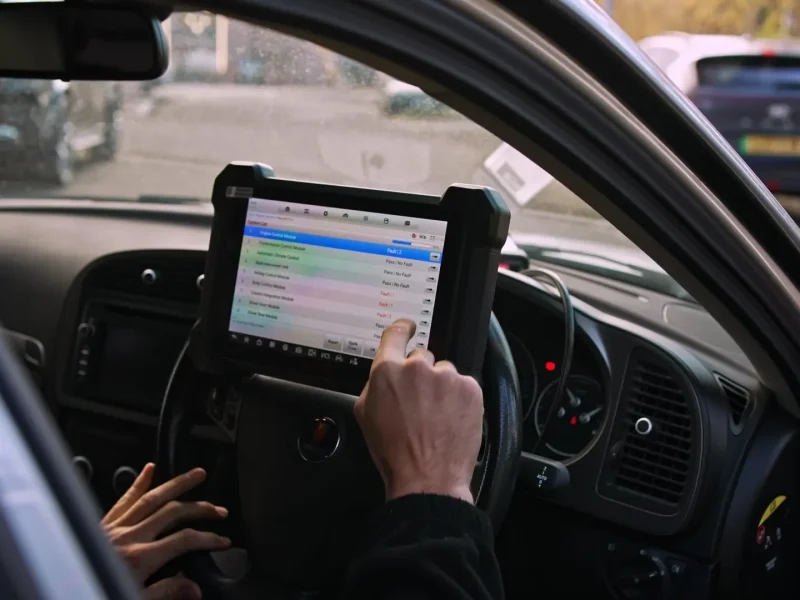
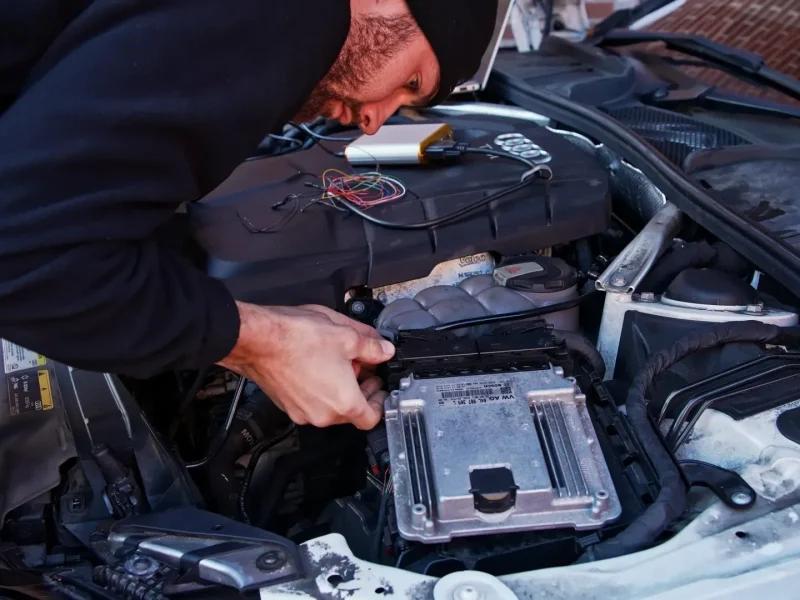
Land Rover EGR deletes follow the same principle as any diesel remap. We connect to the ECU via the OBD port and rewrite the EGR control maps so the engine management system no longer expects or monitors EGR function. The result is a vehicle that does not produce EGR fault codes and does not drop into limp mode because of EGR failure.
We do not remove any physical components. The EGR valve and cooler remain in place. The change is entirely in the software.
Coverage and booking
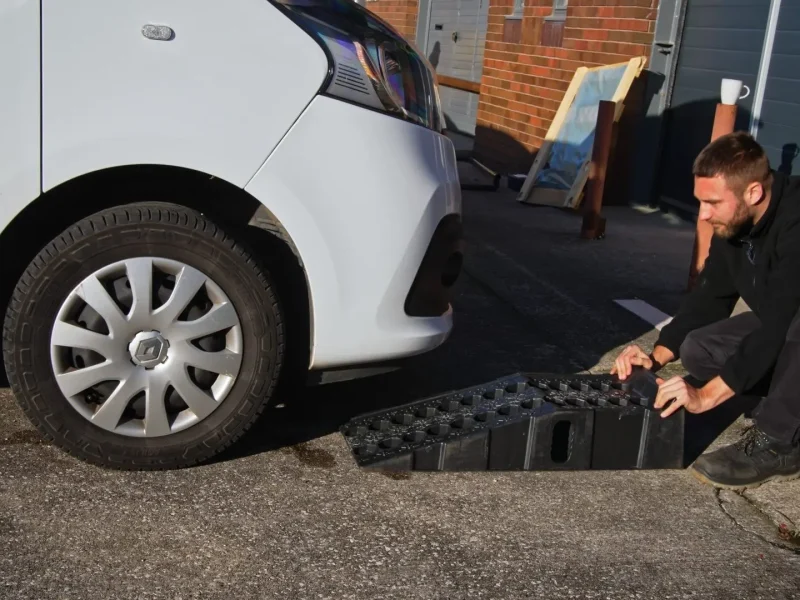
We travel to your location anywhere within a 40-mile radius of Eccles. For rural and agricultural customers, this means we can come to a farm, estate, yard or workshop rather than requiring you to recover the vehicle to us. We cover Greater Manchester, Bolton, Wigan, Salford, Stockport, Warrington, Preston, Oldham and surrounding areas.
Call 0161 694 7331. Tell us your model, engine and the faults you are seeing. We will confirm suitability and arrange a time.
Price
Land Rover EGR delete is £220 flat, regardless of model or engine. No call-out charge.