

Land Rover Freelander EGR delete
The Freelander 2 has a known EGR problem and it is extremely well-documented. The 2.2 TD4 DW12 engine, a Ford-derived unit shared with the Peugeot/Citroën group, develops EGR cooler and valve failures from around 80,000 miles with a regularity that makes the fault practically predictable. If your Freelander is approaching that mileage and you are seeing rough running, intermittent limp mode, or an engine management light, the EGR is the first place to look.
We carry out a permanent software-based EGR delete via ECU remap. Mobile service. £220 flat.
This service is for off-road and track use only. EGR delete is not permitted for use on UK public roads.
The DW12 engine and why EGR is its weak point
The 2.2 TD4 DW12 is a robust engine in most respects. It is torquey, relatively compact, and well-suited to the Freelander's weight and use case. The EGR system, however, is where it consistently lets owners down.
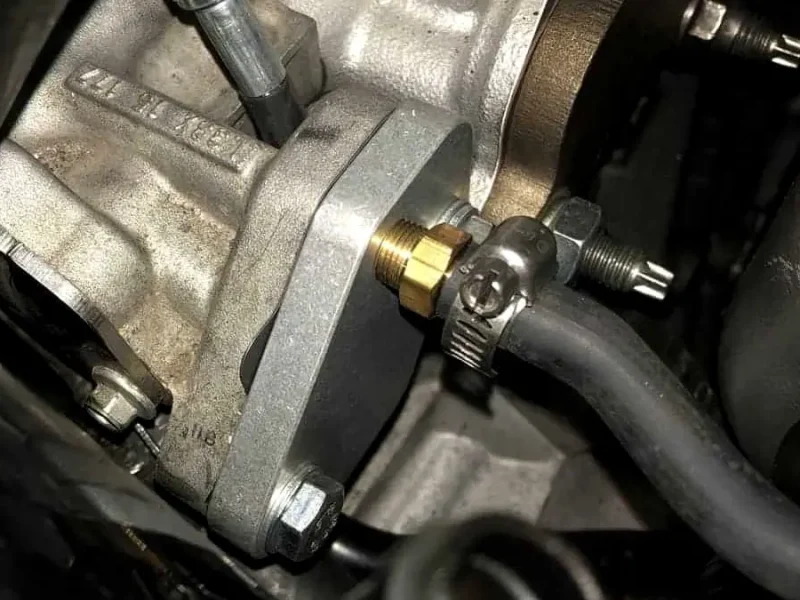
The DW12 runs a combined EGR valve and cooler unit. When the cooler develops an internal leak, which happens on many examples between 80,000 and 100,000 miles, coolant can enter the EGR passages and eventually reach the intake. This is a more serious failure mode than a simple sticky valve. It accelerates carbon accumulation and, in the worst cases, introduces coolant into the combustion cycle.
Even without a cooler failure, the standard valve sticking issue develops on schedule. The Freelander is often used for school runs, local journeys, and light off-road work, the kind of mixed-use pattern that does not give the EGR system enough sustained heat to clean itself.
The DW12 also appears in the Peugeot 508, Citroën C5, and various PSA commercial vehicles, and the EGR failure pattern is consistent across all of them. On the Freelander, Land Rover's specific calibration adds an additional sensitivity to EGR flow data that makes the engine management light trigger quickly when the valve is underperforming.
What the ECU delete does
We remap the ECU to remove EGR valve control and monitoring. The EGR valve receives no signal, does not open, and is not monitored by the engine management system. The fault codes associated with EGR flow, position, and circuit faults are removed from the active monitoring routine.
There is no physical work involved. The existing valve and cooler assembly remain in place. The ECU simply treats EGR as a non-active system. This is particularly relevant on the DW12 where the cooler may already be degraded, removing any EGR operation stops further coolant ingress risk from the EGR circuit.
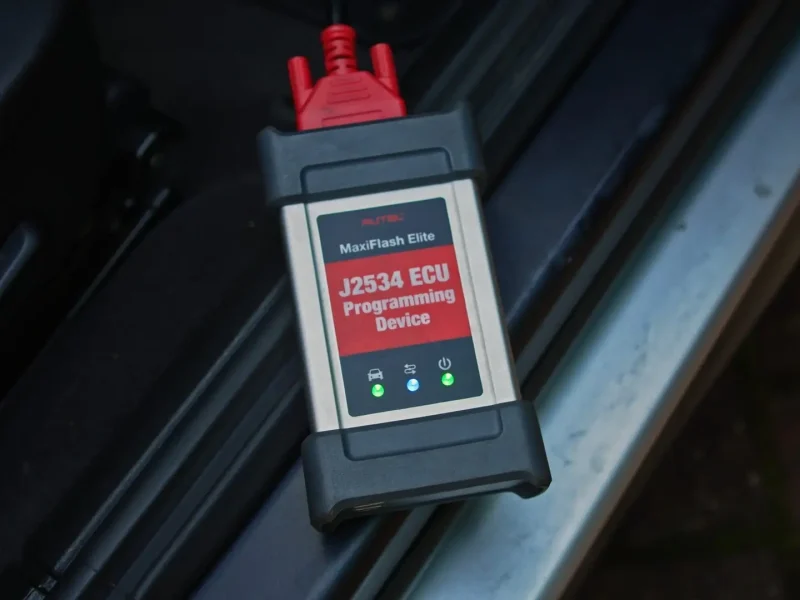
We connect via the OBD port, read the ECU, apply the EGR delete map, and write it back. The process takes around 90 minutes on the Freelander 2. We verify the remap is clean and confirm all EGR fault codes are gone before we leave.
Discovery Sport also covered
The Discovery Sport (L550) with the 2.0 Ingenium TD4 engine is covered under the same service. The Ingenium is a newer, all-aluminium engine from Land Rover's own design, but EGR faults are appearing on Discovery Sports with higher mileage, particularly those used as family runabouts with a lot of mixed urban and short-run driving.
The ECU architecture differs from the DW12, but the delete process is equally effective. If you have a Discovery Sport with EGR fault codes, call us with the registration and we will confirm compatibility before booking.
Off-road use and the Freelander
Land Rover ownership and genuine off-road use go hand in hand. Many Freelanders are used for exactly the kind of work that qualifies as off-road application: green laning, estate tracks, agricultural access. The EGR delete service is appropriate for vehicles used in these contexts.
If your Freelander is primarily a road vehicle, this service is not for you. If it is used for off-road or track applications, call us.
Pricing and booking
£220 for the Freelander 2 2.2 TD4 and Discovery Sport 2.0 TD4. Mobile, nationwide. Call 0161 694 7331 with your registration and we will get a date in the diary.
Frequently asked questions
My Freelander 2 has a coolant smell and rough idle. Is that the EGR cooler?
Does the software delete stop the cooler from leaking?
Is the DW12 the same engine as in the Peugeot 508?
What year range of Freelander 2 do you cover?
Can you do the Freelander at a rural address?
How long does the job take on site?
Other Land Rover models we cover
Pick your model: