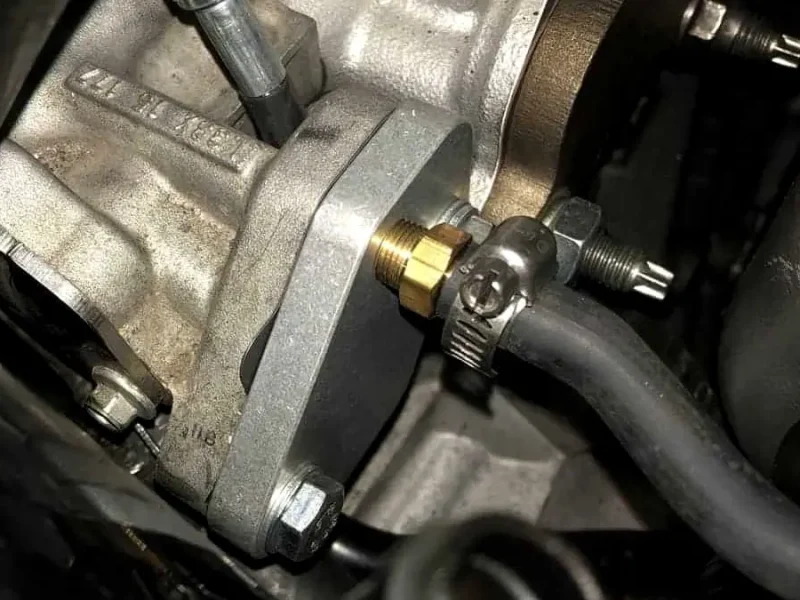

What does an EGR valve do?
The EGR valve, short for Exhaust Gas Recirculation, is a component fitted to most modern diesel engines. Its job is to take a portion of the exhaust gases produced during combustion and feed them back into the engine's air intake. By diluting the fresh air charge with spent gases, it lowers peak combustion temperatures, which in turn reduces how much nitrogen oxide (NOx) the engine produces.
About the EGR valve
NOx is a harmful pollutant linked to air quality problems and respiratory conditions. Reducing it became a legal requirement as EU emissions standards tightened, first under Euro 5, and then more strictly under Euro 6. For vehicle manufacturers, the EGR valve was a straightforward way to meet those targets without major changes to the engine itself.
Why EGR valves cause problems
The logic behind EGR is sound, but the reality is messier. Exhaust gases are not clean. They carry soot, carbon deposits, and oil vapour, and every time those gases are recirculated back through the intake, they leave a little of that residue behind.
Over time, carbon builds up on the valve itself, on the EGR cooler, and on the walls of the intake manifold. Eventually the valve sticks, either open or closed, or stops responding accurately to the signals from the engine management system. When that happens, the engine cannot regulate combustion temperatures correctly and fault codes appear.
Common symptoms include:
The vehicles most likely to experience these problems are high-mileage diesel cars and vans used in stop-start conditions, exactly the kind of driving that typifies tradespeople, delivery drivers, and fleet vehicles. Short journeys at low speeds give the engine less opportunity to burn off deposits, so the build-up happens faster.
What we do about it
At The EGR Specialist, we carry out an EGR delete via ECU remap. Rather than cleaning the valve or replacing it, a temporary fix at best, we remove the EGR instruction from the engine's software entirely. The ECU is remapped so it no longer attempts to operate the valve, eliminating the fault at source.
The service costs £220 and is fully mobile, we come to you anywhere within a 40-mile radius of Eccles, covering the whole of Greater Manchester. Our technicians have worked on more than 7,000 vehicles, across a wide range of makes and models.
Please note: EGR delete is for off-road and track use only. It is not legal for use on public roads in the UK.
To find out if your vehicle is suitable or to book, call us on 0161 694 7331.