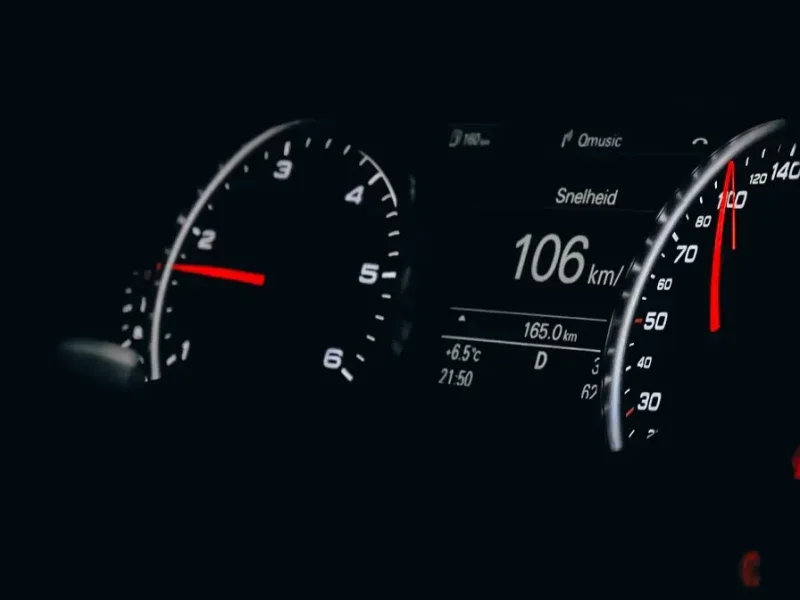

Engine management light on? Here's what it could mean
The engine management light (EML) is one of the most common warning lights to appear on a dashboard, and one of the most misunderstood. It doesn't tell you what's wrong. It tells you the ECU has detected a fault and stored a code. To know what's actually going on, you need to read that code.
Here's what you need to know, and what to do next.
Steady light vs flashing light
There's an important difference between a steady engine management light and a flashing one.
A steady light means the ECU has logged a fault, but it's not currently causing active damage. You can usually continue driving, but you shouldn't leave it. Faults that sit unresolved often develop into bigger problems, and if your vehicle goes into limp mode, you'll know about it.
A flashing light is more serious. It typically indicates a misfire or an active fault that could damage your engine or catalytic converter. If the EML is flashing, reduce your speed and get the vehicle checked as soon as possible. Don't ignore it and carry on driving as normal.
Common causes of the engine management light on diesel vehicles
The EML can be triggered by dozens of different fault codes. On diesel vehicles, the most common culprits are:
EGR (exhaust gas recirculation) fault
one of the most frequent triggers, particularly on diesels. Common codes include P0401, P0402 and P0403.
DPF (diesel particulate filter) fault
often appears alongside EGR issues or after lots of short, stop-start journeys.
MAF (mass airflow) sensor fault
affects how the engine calculates fuel delivery.
O2 / lambda sensor fault
triggers when the exhaust oxygen sensor isn't reading correctly.
Injector fault
can cause rough running, misfires or poor fuel economy alongside the EML.
Turbo boost fault
pressure issues in the turbo system, sometimes linked to EGR problems on high-mileage vehicles.
EGR faults are among the most common triggers
If you drive a diesel and the engine management light has come on, there's a strong chance an EGR fault is involved. The EGR valve recirculates exhaust gases back into the engine to reduce emissions, but over time it clogs with carbon deposits and starts causing problems. When it does, the ECU logs a fault and the EML illuminates.
Symptoms often include sluggish performance, rough idling, reduced fuel economy or the vehicle dropping into limp mode.
The EGR Specialist has worked on over 7,000 vehicles across Greater Manchester. EGR faults are what we deal with every day.
What to do when your engine management light comes on
Step one: read the code.
You don't need a garage for this. A basic OBD2 reader costs £20–£30 from Halfords or Amazon. Plug it into the OBD port (usually under the dashboard on the driver's side), read the fault code, and write it down.
Step two: call us.
If the code points to an EGR fault, P0401, P0402, P0403, or similar, we can fix it. We offer a mobile ECU remap that permanently deletes the EGR system from the vehicle's software, eliminating the fault at source. We come to you anywhere within a 40-mile radius of Eccles, across Greater Manchester. The service costs £220 and is carried out off-road for track and off-road use only.
Call us on 0161 694 7331 to discuss your fault code and book a visit.